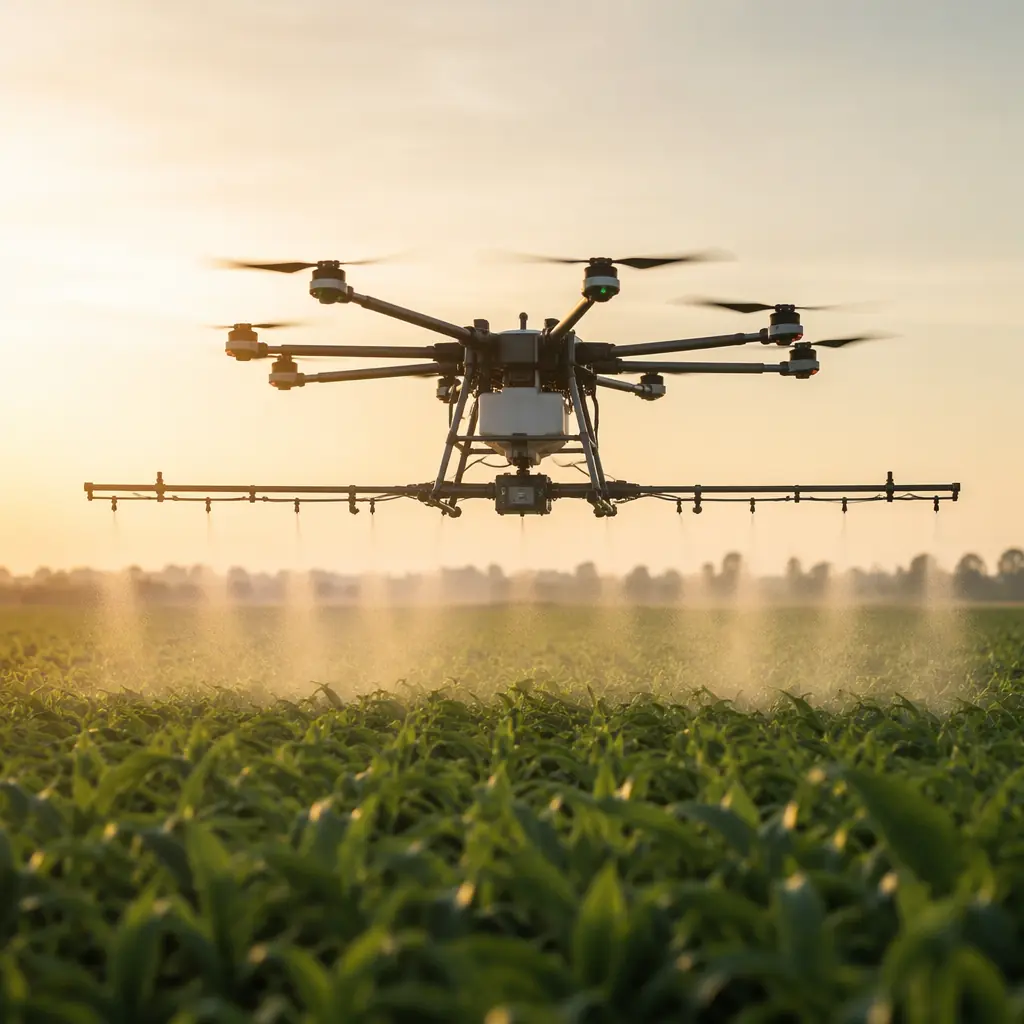
Agricultural UAV spraying has scaled faster than any other commercial drone application. In China alone, over 250,000 agricultural spraying drones were operational by the end of 2025, covering approximately 180 million hectares of farmland annually. In Southeast Asia, Latin America and Africa, the adoption curve is roughly 3–5 years behind China's — creating a component procurement demand that will grow at 25–35% CAGR through 2030. But the component supply chain for agricultural UAVs is unlike any other UAV segment. An inspection drone that gets wet lands and dries off. A spraying drone that gets wet with glyphosate concentrate lands and corrodes. The procurement standard for agricultural UAV components is not performance — it is survivability in continuous chemical exposure, followed by performance.
The agricultural UAV component chain has five specialized links that do not exist in other UAV segments. The spraying system — pump, flow meter, boom, nozzles — determines the application rate and droplet size distribution, which directly affect chemical efficacy and drift risk. The airframe materials and coating determine whether the aircraft survives 500 hours of chemical exposure without structural degradation. The flight controller and navigation system determine the spray pattern accuracy — whether the aircraft follows the crop row with sub-meter precision and adjusts altitude for terrain variation. The propulsion system must lift not just the aircraft but a 10–40 liter liquid payload whose mass decreases continuously during the flight, shifting the CG and changing the thrust requirement. And the battery system must deliver consistent power across 8–15 short-duration flights per day, with rapid turnaround between missions. These five links are interdependent — a heavier tank requires more thrust, which draws more current, which reduces the number of flights per battery charge cycle. Component decisions made in isolation produce a system that cannot complete a full day of field operations without a battery logistics bottleneck.
Spraying systems: pump, flow control and nozzle selection
The spraying system is the mission payload of an agricultural drone, and its specifications determine the quality of every chemical application the aircraft performs. The three parameters that define a spraying system are flow rate, droplet size distribution and flow control accuracy. A system that delivers the correct flow rate but produces droplets that are too fine — below 100 μm volume median diameter (VMD) — loses 20–40% of the chemical to drift before it reaches the crop canopy. A system that produces the correct droplet size but cannot maintain a constant flow rate as the tank empties and the pump's inlet head decreases applies inconsistent chemical concentration across the field. The component-level decisions that control all three parameters are the pump type, the flow control strategy and the nozzle selection.
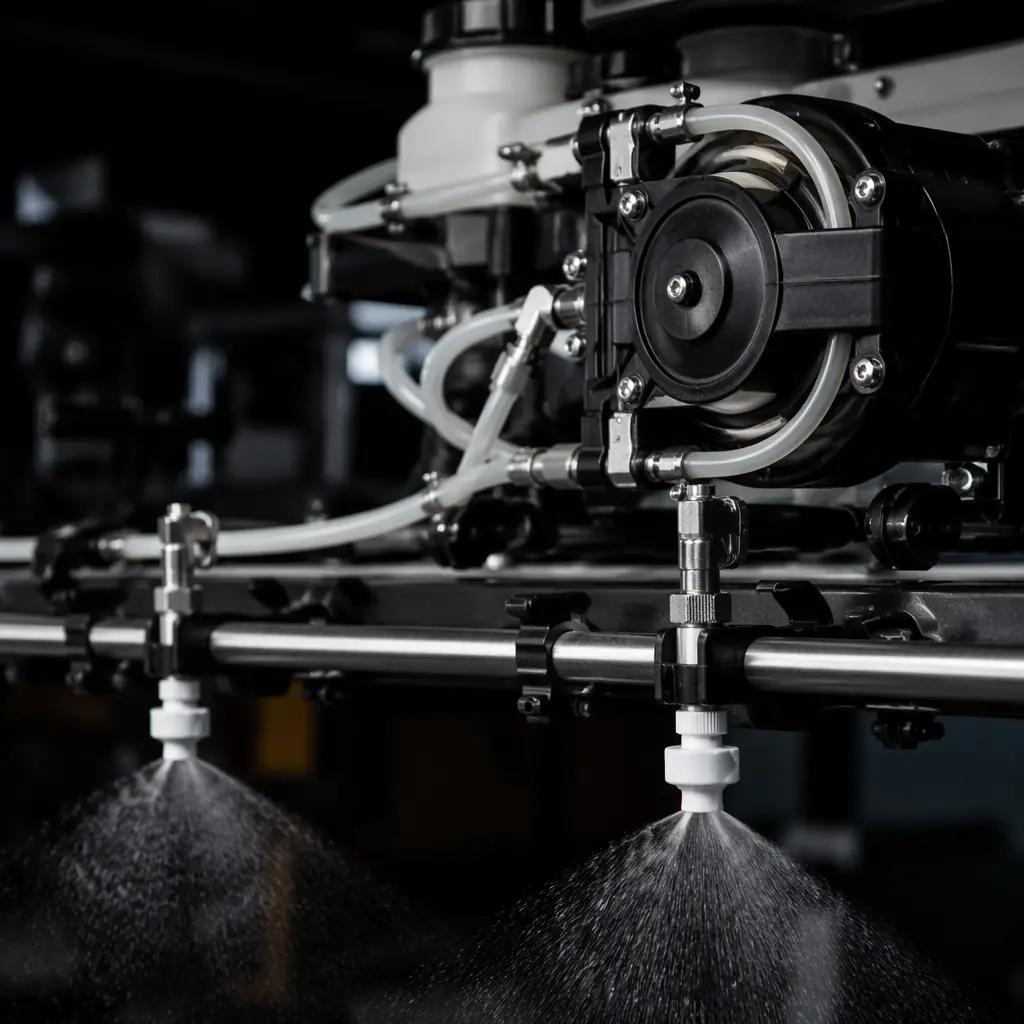
Pump type and chemical compatibility. Agricultural spraying drones use one of three pump types: diaphragm pumps, centrifugal pumps, or peristaltic pumps. Diaphragm pumps dominate the 5–20 liter tank volume class because they deliver consistent flow rate regardless of the tank's fill level — a diaphragm pump's output is determined by its stroke volume and speed, not by the inlet head, so the flow rate remains within ±5% from a full tank to an empty tank. A 12V diaphragm pump rated at 2–4 L/min at 0.3–0.5 MPa delivers the flow rates required for most UAV spraying applications at 1–8 m/s flight speed with 4–8 nozzles on a 3–5 meter spray boom. The critical specification for chemical compatibility is the pump's wetted materials: the diaphragm must be EPDM or Viton (not natural rubber, which swells and delaminates in contact with hydrocarbon-based adjuvants), the check valves must be 316 stainless steel or Hastelloy (not brass, which dezincifies in acidic pesticide solutions), and the pump housing must be polypropylene or PVDF (not aluminum, which pits within 50 hours of exposure to glyphosate formulations). The peristaltic pump is gaining adoption in the 20–40 liter class because its only wetted component is the replaceable tube — a $5–10 consumable — eliminating the diaphragm, check valves and seals as failure points. The trade-off is that peristaltic pumps produce a pulsating flow that requires a pulse dampener downstream to maintain consistent nozzle pressure.
Flow control and nozzle selection. The two variables that determine chemical application rate — liters per hectare (L/ha) — are the total flow rate from the nozzles and the aircraft's ground speed. The flow rate is controlled either by varying the pump speed (PWM pump control) or by maintaining constant pump pressure and cycling solenoid valves at each nozzle (PWM nozzle control). Pump speed control is simpler — one PWM channel from the flight controller to the pump motor driver — but the flow rate change has a 1–3 second lag as the system pressure stabilizes, creating application rate errors during speed changes. Nozzle-level PWM control with a constant-pressure manifold delivers near-instantaneous flow rate adjustment at each nozzle independently, enabling turn compensation — reducing flow on the inside nozzles and increasing flow on the outside nozzles during a turn — which eliminates the 15–30% application rate error that occurs when a fixed-flow system turns at the end of a row. The nozzle type determines the droplet size spectrum: flat fan nozzles with a 110° spray angle produce droplets in the 150–250 μm VMD range at 0.2–0.3 MPa — the sweet spot for herbicide and fungicide application with acceptable drift control. Air-induction (venturi) nozzles produce larger droplets (300–450 μm VMD) with fewer drift-prone fines, at the cost of reduced canopy penetration. The nozzle material must be ceramic or 316 stainless steel for chemical resistance; brass nozzles wear at a rate of approximately 2–5% increase in flow rate per 100 hours of operation due to orifice erosion from abrasive wettable powder formulations.
 Concept illustration
Airframe materials and chemical resistance
The airframe of an agricultural spraying drone is exposed to chemicals on every flight — not just during spraying, but during tank filling (splashes and spills), during flight (drift recirculation around the airframe), and during cleaning (high-pressure water with chemical residue). A standard carbon fiber airframe with an epoxy matrix that is not specifically formulated for chemical resistance absorbs approximately 0.5–1.5% of its mass in water and chemical solution after 200 hours of exposure, causing matrix softening, delamination at stress concentration points, and a 10–20% reduction in flexural strength. The airframe material selection for agricultural UAVs prioritizes chemical resistance at the expense of some structural efficiency.
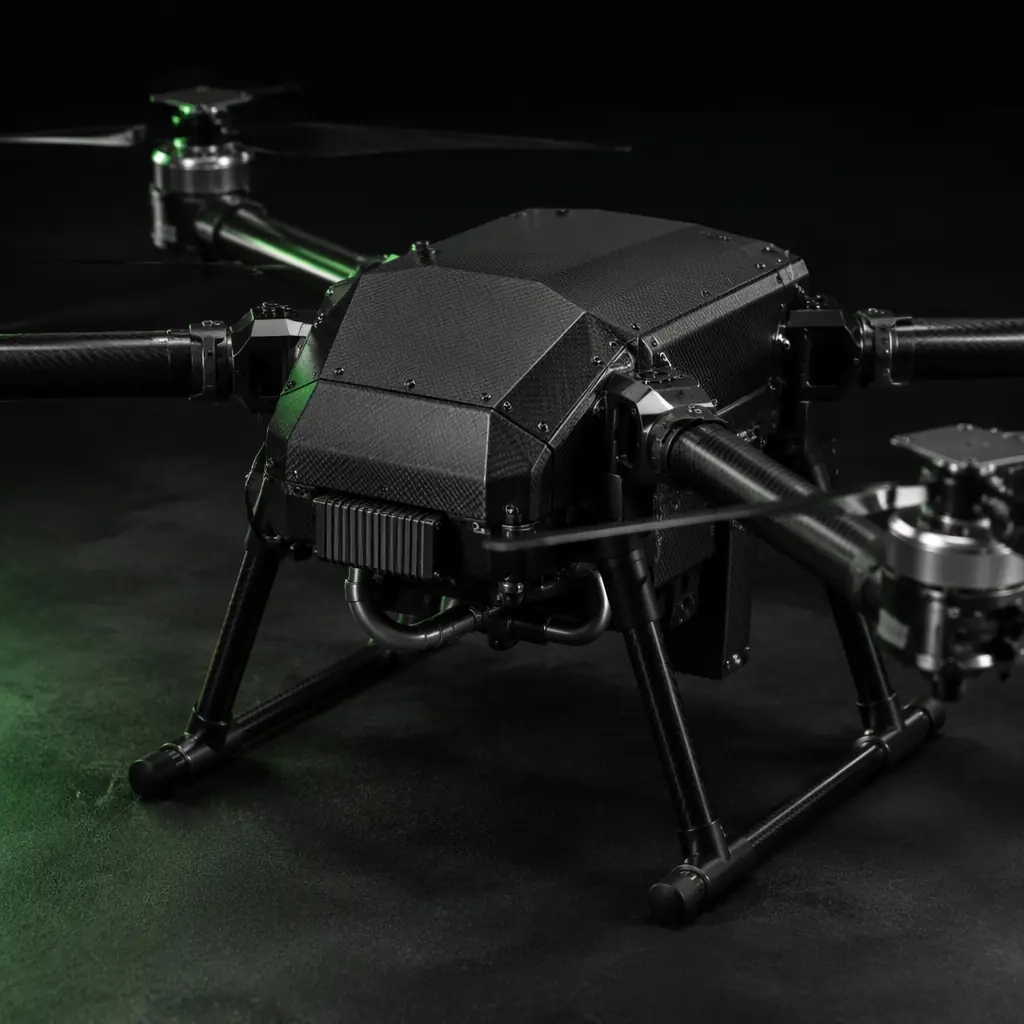
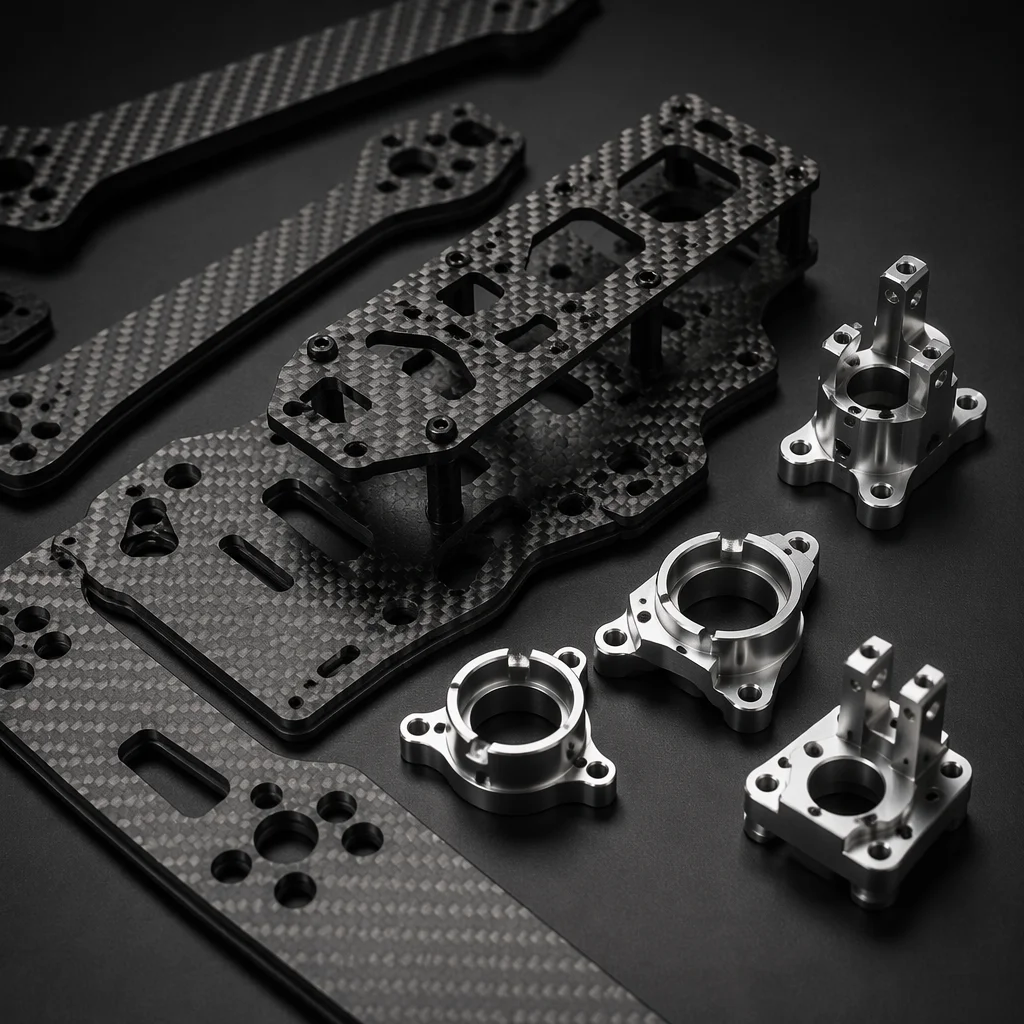
Frame materials and coatings. The frame structure of an agricultural UAV should use carbon fiber with a vinyl ester or epoxy-novolac resin matrix — not standard epoxy — for the primary structural elements. Vinyl ester resins resist hydrolysis and chemical attack significantly better than standard epoxy; a vinyl ester carbon fiber laminate retains >90% of its flexural strength after 1,000 hours of immersion in a 10% glyphosate solution at 40°C, compared to 55–70% retention for a standard epoxy laminate under the same conditions. The aluminum components in the airframe — motor mounts, landing gear brackets, arm clamps — must be anodized (Type III hard anodize, 25–50 μm thickness) or coated with a chemical-resistant epoxy paint. Raw 6061-T6 aluminum exposed to glyphosate and surfactant tank mixes develops intergranular corrosion pits 50–150 μm deep within 100 hours of cumulative exposure — deep enough to act as stress concentration sites that reduce the fatigue life of the component by 40–60%.
Sealing and electronics protection. The flight controller, ESCs, GPS/compass module and receiver must be conformally coated or potted to IP65 or better. A conformal coating of acrylic, silicone or polyurethane at 25–50 μm thickness provides adequate protection against chemical mist and splashes, but it does not protect against direct spray or immersion. For components mounted in areas exposed to direct spray — such as the pump motor driver, flow meter electronics, and the forward-facing sensors — a fully potted enclosure (IP67) with chemical-resistant cable glands is the minimum standard. Silicone conformal coating provides the best chemical resistance of the three common coating types, followed by polyurethane, then acrylic — but silicone is difficult to rework or repair because soldering through it produces corrosive decomposition products. For the component mounting and vibration isolation strategy, the UAV payload integration guide covers the mechanical interface standards for agricultural payloads.
 Concept illustration
RTK navigation and terrain following for row crops
Agricultural spraying accuracy is measured in two dimensions: lateral (whether the aircraft follows the crop row without gaps or overlaps) and vertical (whether the spray height above the canopy is consistent). A 1-meter lateral position error in a 5-meter spray swath produces a 20% overlap on one side and a 20% gap on the other — the overlap area receives double the intended chemical dose (phytotoxicity risk) and the gap area receives none (pest survival). A vertical error of 1 meter above the target height changes the droplet travel time from the nozzle to the canopy by approximately 0.3–0.5 seconds, during which time the droplet evaporates, drifts or both — reducing the chemical deposition on the target by 15–30% at the same application rate.
The minimum navigation configuration for row-crop spraying is a multi-band GNSS receiver (L1/L2) with RTK correction delivering 2.5 cm horizontal accuracy at 10 Hz update rate. The RTK correction source can be a local base station (best accuracy, requires line of sight to the base), an NTRIP caster over 4G/LTE (convenient, dependent on cellular coverage in rural areas), or a satellite-based augmentation system such as QZSS CLAS in Japan or the upcoming Galileo HAS in Europe (moderate accuracy at 10–20 cm, adequate for broad-acre spraying where the swath width is 6–8 meters and a 20 cm position error represents 2.5–3.3% overlap). The GNSS antenna must be mounted above the spray plume — the water and chemical mist attenuates GNSS signals at L-band (1.2–1.6 GHz) by 0.5–3 dB depending on the mist density, which degrades the carrier-to-noise ratio and increases the RTK solution's time-to-fix after signal interruption.
Terrain following for agriculture is fundamentally different from terrain following for mapping. A mapping drone follows the bare-earth terrain to maintain consistent GSD. An agricultural drone follows the crop canopy height to maintain consistent spray distance above the plants. The sensor for agricultural terrain following is typically a radar altimeter (24 GHz or 60 GHz) rather than a LiDAR rangefinder, because the radar penetrates the crop canopy and returns the ground surface, while the LiDAR reflects from the top leaves and returns the canopy surface. For spraying, the desired reference is the canopy surface, so a LiDAR altimeter (or a downward-facing ultrasonic sensor for cost-sensitive applications) provides the correct reference. The flight controller adjusts the aircraft's altitude to maintain a constant distance above the canopy as the terrain and crop height vary, using the same digital elevation model (DEM) approach as mapping terrain following but with an active sensor correction layer. For the flight controller and ESC configuration that enables precise altitude tracking, the flight controller and ESC matching guide covers the protocol and parameter requirements.
Propulsion for variable-mass flight
An agricultural spraying drone takes off with a full tank and lands with an empty tank — a mass change of 10–40 kg over a 10–20 minute flight. The propulsion system must maintain stable attitude control and consistent spray altitude as the aircraft's mass decreases by 30–50% during the mission. This is a fundamentally different control problem from a mapping drone, whose mass is constant (minus the negligible fuel consumption of battery discharge).
The motor selection for a variable-mass agricultural UAV starts with the thrust requirement at two operating points: takeoff mass (maximum thrust required) and landing mass (minimum thrust required for stable control). At maximum takeoff mass — aircraft dry weight plus full tank — the motors must deliver at least 1.8:1 thrust-to-weight to provide adequate climb performance and yaw authority. At minimum landing mass — aircraft dry weight plus residual tank contents (typically 2–5% of tank capacity that cannot be pumped out) — the motors must still operate above their minimum stable throttle point, typically 25–35% of the PWM range. A motor that requires 45% throttle to hover at landing mass leaves only 20% of the throttle range for attitude control — the flight controller runs out of control authority during gust response or rapid descent. The solution is to select motors whose hover thrust at landing mass falls at 30–35% throttle, which requires a motor with a broader efficient operating range — typically achieved with a lower KV rating (60–100 KV at 12S for 30–34 inch propellers on an octocopter configuration) that produces the required thrust across a wider throttle band.
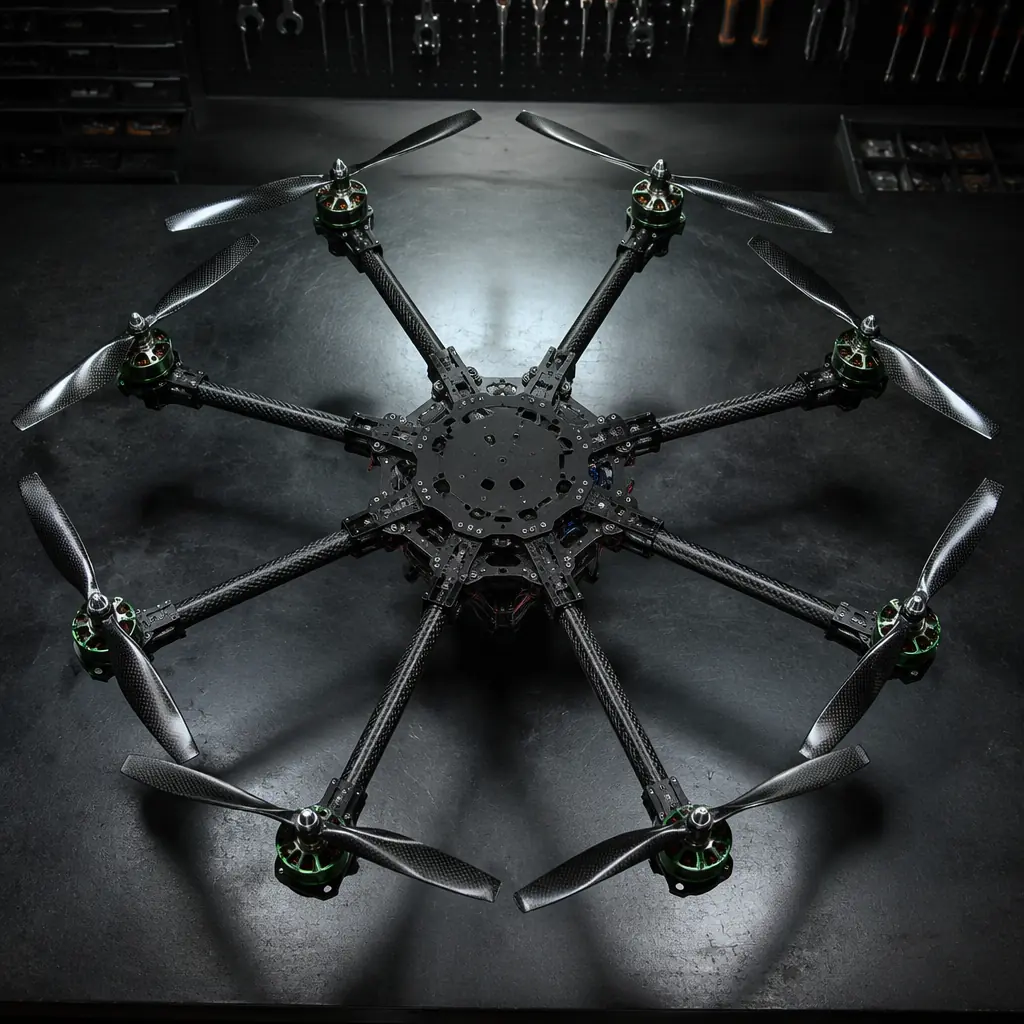
The octocopter configuration is dominant in agricultural spraying above 20 liters tank capacity for two reasons. First, an octocopter provides motor redundancy — the loss of one motor on an octocopter at 85% of maximum thrust per motor leaves each remaining motor at 97% of its maximum, within the burst rating of most commercial motors. The loss of one motor on a hexacopter at the same thrust margin requires each remaining motor at 120% of its maximum — exceeding the burst rating and causing a second motor failure within seconds. Second, the octocopter's eight smaller propellers produce a more distributed downwash than a hexacopter's six larger propellers, producing a more uniform spray deposition pattern beneath the aircraft. The concentrated downwash columns from large hexacopter propellers create alternating bands of high and low deposition — visible as stripes in the crop 3–5 days after herbicide application. For the propeller and motor matching methodology that avoids this pattern, the UAV powertrain matching guide covers the thrust distribution and propeller selection for multirotor configurations.
 Concept illustration
Battery strategy for high-cycle field operations
An agricultural spraying operation flies 8–15 missions per day per aircraft, each lasting 10–20 minutes, with 5–10 minute turnaround between flights for battery swap, tank refill and a visual inspection. This operational tempo demands a battery strategy that is fundamentally different from single-mission UAV applications — the constraint is not energy density per flight but sustained throughput across a 10-hour field day with minimal turnaround time.
The battery configuration for high-cycle agricultural operations centers on hot-swappable packs with a ground charging infrastructure that enables continuous rotation. A typical 12S LiPo or 6S2P Li-Ion pack providing 18–25 minutes of spraying endurance weighs 8–12 kg — at this weight, field personnel can swap a pack in 60–90 seconds without mechanical assistance. A fleet of three packs per aircraft — one flying, one cooling, one charging — enables continuous operation with a 5–7 minute turnaround between flights. The charging infrastructure must deliver 2–3C charge rates (20–30 minutes to 80% state of charge for a 12S 22,000 mAh pack) from a generator or vehicle inverter in the field. At 12S, a 3C charge requires approximately 44.4 V × 66 A = 2.9 kW per charging channel, easily supplied by a 5 kW portable generator running two charging channels simultaneously.
The battery chemistry choice for agricultural operations favors LiPo over Li-Ion for a counterintuitive reason: cycle life under partial discharge conditions. A LiPo pack cycled between 100% and 30% state of charge (70% depth of discharge) at 3C discharge retains approximately 80% of its initial capacity after 300–400 cycles. A 21700 Li-Ion pack under the same conditions retains approximately 80% after 500–600 cycles — the Li-Ion advantage in cycle life is real, but the LiPo pack's lower cost per watt-hour (approximately USD 0.25–0.35/Wh vs. USD 0.45–0.60/Wh for assembled 21700 packs) means the LiPo pack reaches its end of life at a lower total cost of ownership. The trade-off shifts in favor of Li-Ion when the mission endurance exceeds 25 minutes, where the Li-Ion's higher energy density reduces the pack weight and increases the payload fraction. For the cell-level specifications and BMS configuration, the UAV battery and power management guide provides the selection methodology.
Procurement checklist: 7 component decisions for agricultural UAVs
These seven component decisions form the minimum validation gate before ordering hardware for an agricultural spraying UAV. Each decision is tied to a specific field-operational requirement — survivability under chemical exposure and consistent performance through a full spraying season of 500–1,000 flight hours.
1. Pump chemical compatibility. Verify the pump's wetted materials against the specific chemical formulations the aircraft will spray. EPDM or Viton diaphragm, 316 SS or Hastelloy check valves, PP or PVDF housing. Validate by immersing the pump's wetted components in the most aggressive chemical in the planned spray program for 100 hours at 40°C: no swelling, softening or mass change >2%.
2. Nozzle material and droplet size verification. Ceramic or 316 SS nozzles with the spray angle and flow rate matched to the target application rate and flight speed. Validate droplet size with a laser diffraction analyzer at the operating pressure: VMD must be within the target range for the chemical type (150–250 μm for herbicides and fungicides, 250–350 μm for insecticides requiring canopy penetration). Nozzle flow rate variation across the boom must be ≤5%.
3. Airframe material and coating specification. Carbon fiber with vinyl ester or epoxy-novolac resin for primary structures. Aluminum components hard anodized to ≥25 μm or coated with chemical-resistant epoxy paint. Electronics conformally coated (silicone, ≥25 μm) or potted (IP67). Validate by exposing a test coupon of each material combination to the spray tank mix for 500 hours: no visible corrosion, no delamination, flexural strength retention >85%.
4. RTK GNSS with terrain-following sensor. Multi-band L1/L2 RTK receiver with ≥10 Hz update rate. Radar or LiDAR altimeter for canopy-referenced terrain following, maintaining ±1 m spray height above the crop. Validate by flying a grid pattern over terrain with 10+ meters of elevation variation: the altitude above the crop surface must remain within ±1.5 m across the entire grid. For the GNSS antenna mounting considerations, see the RF systems guide.
5. Motor sizing for variable mass. Hover thrust at takeoff mass ≥1.8× AUW. Hover thrust at landing mass falls at 30–35% throttle to leave adequate control authority margin. Validate with a flight test at minimum mass (empty tank): the flight controller's attitude control outputs (roll, pitch, yaw) must remain below 80% of their maximum during a 3 m/s gust response maneuver.
6. Octocopter redundancy verification. For aircraft with ≥20 liter tank capacity: octocopter configuration with motor redundancy. Validate by disabling one motor in flight (software motor stop command) at hover with a full tank: the aircraft must maintain stable hover with the remaining seven motors at ≤95% throttle, and execute a controlled descent to landing without attitude instability.
7. Battery cycle-life economics. Calculate the total cost per flight hour including battery replacement at the expected cycle life for the operational depth of discharge. Compare LiPo and Li-Ion total cost of ownership for the mission profile. Validate the battery pack's actual cycle life by running 50 cycles at the operational charge/discharge rate and measuring the capacity fade: the fade rate must be linear, not accelerating, indicating that the cells are not being damaged by the charge/discharge regime. For the pack configuration and thermal management strategy, see the battery management guide and the build vs. buy cost analysis framework.
Explore agriculture solutions Back to Blog
Continue Reading
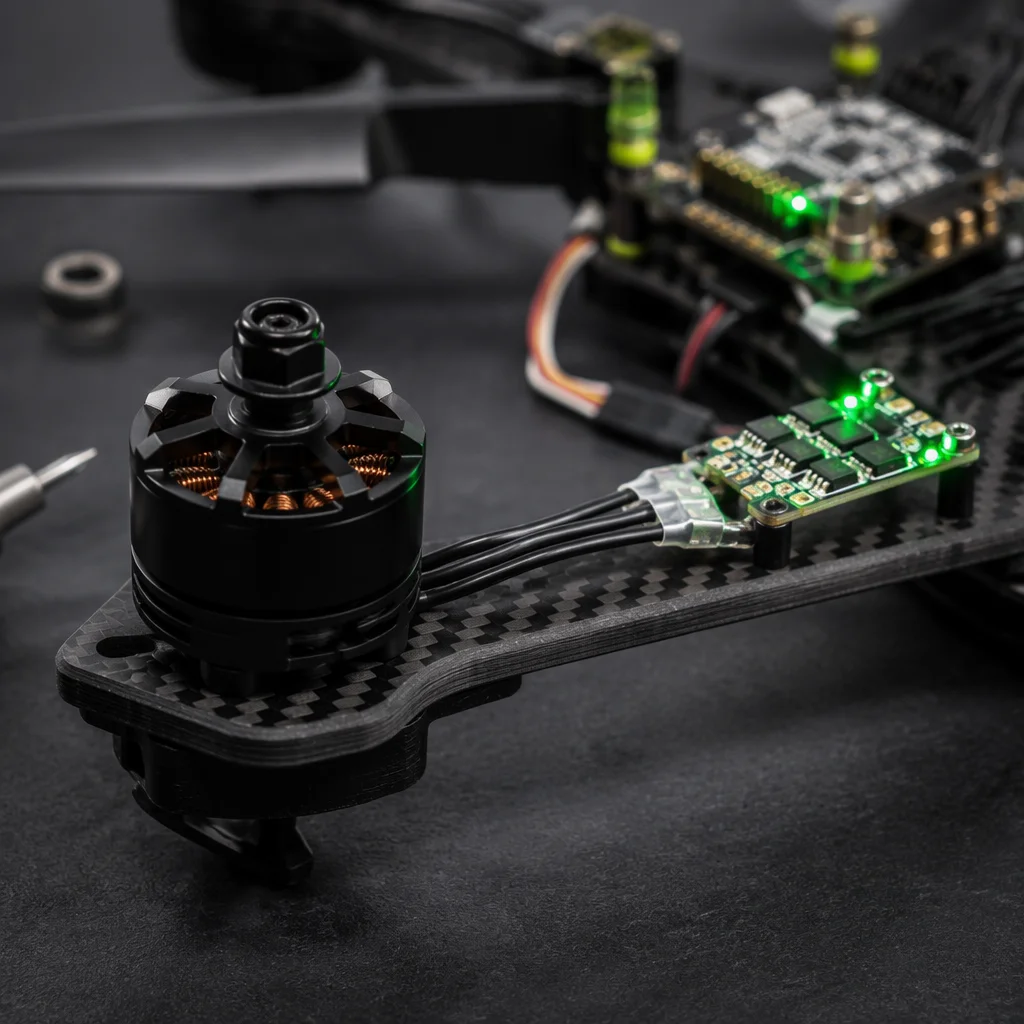
UAV Powertrain Matching
Motor KV, propeller sizing and ESC selection for octocopter configurations with 30–34 inch props.
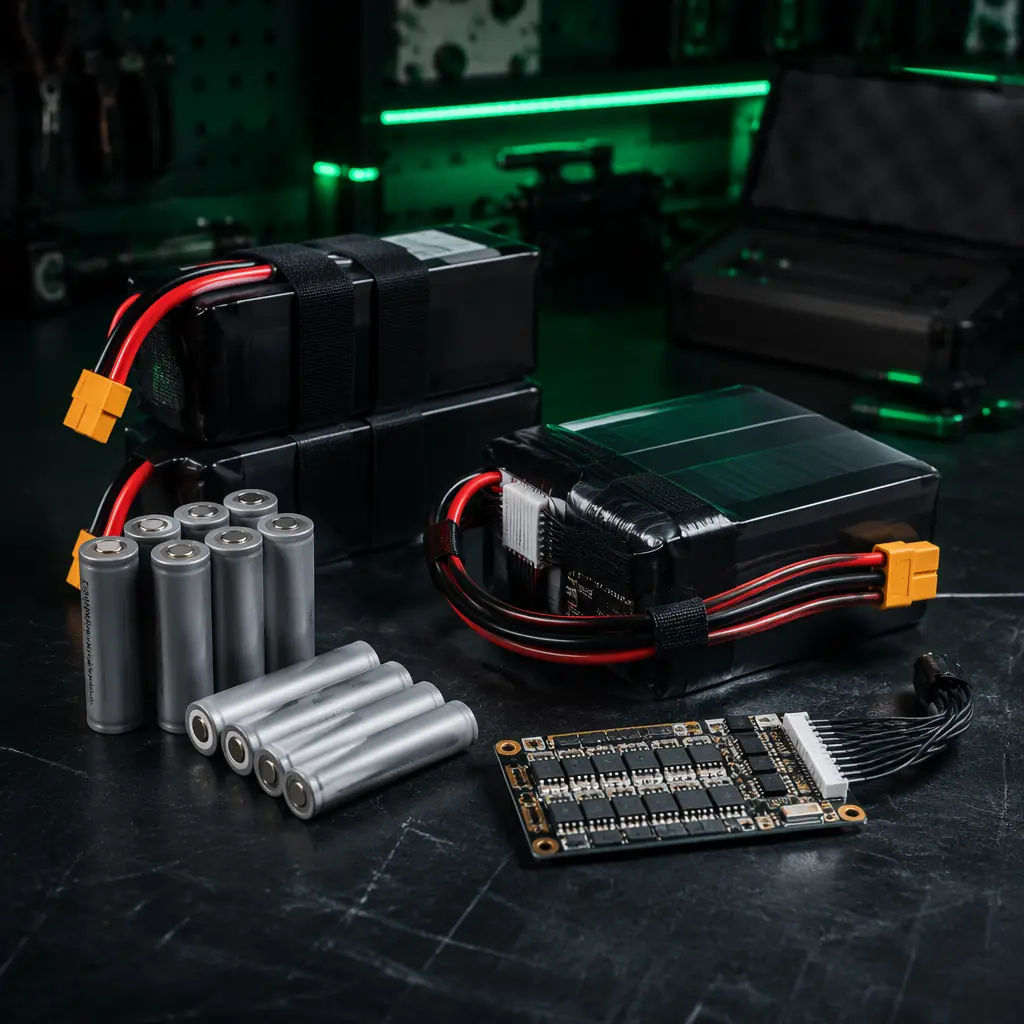
Battery & Power Management
LiPo vs. Li-Ion pack economics for high-cycle agricultural field operations.
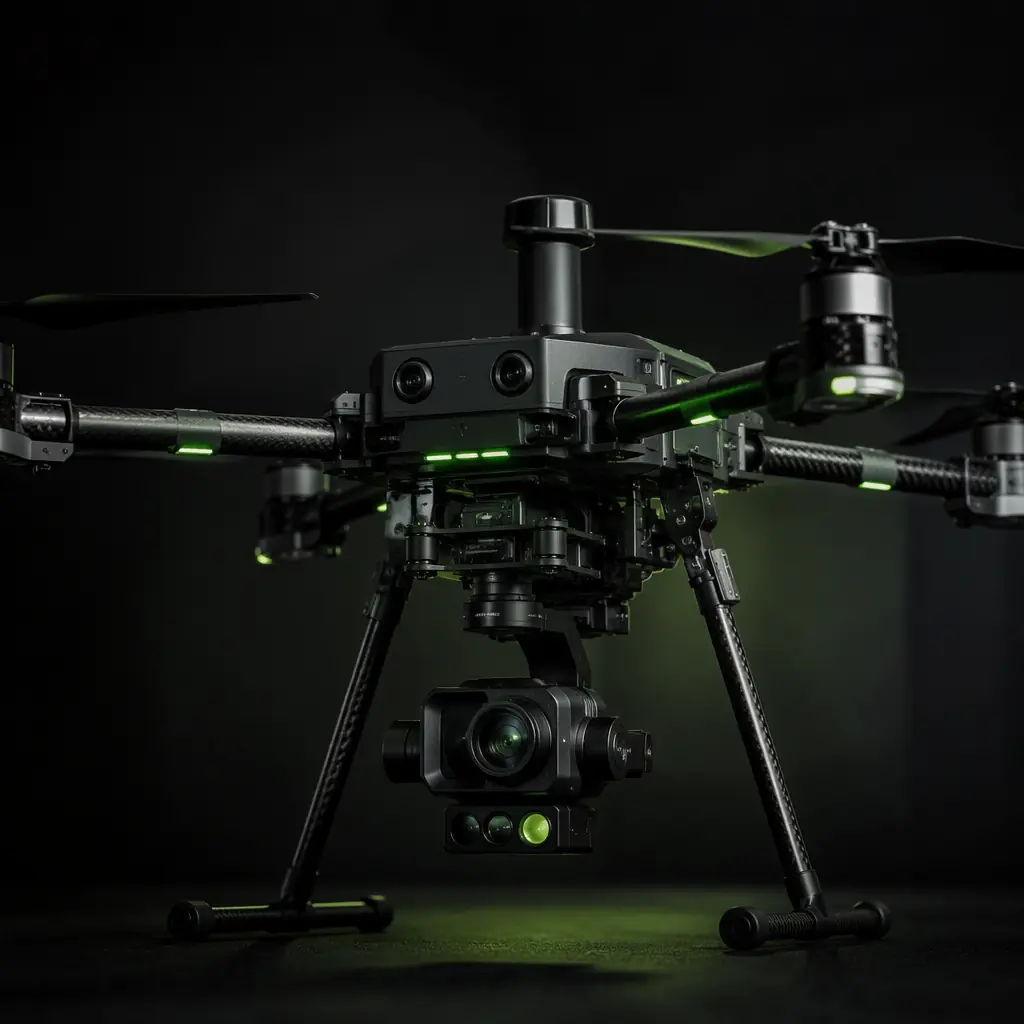
UAV Payload Integration Guide
Spray boom mounting, pump integration and chemical-resistant interface standards.
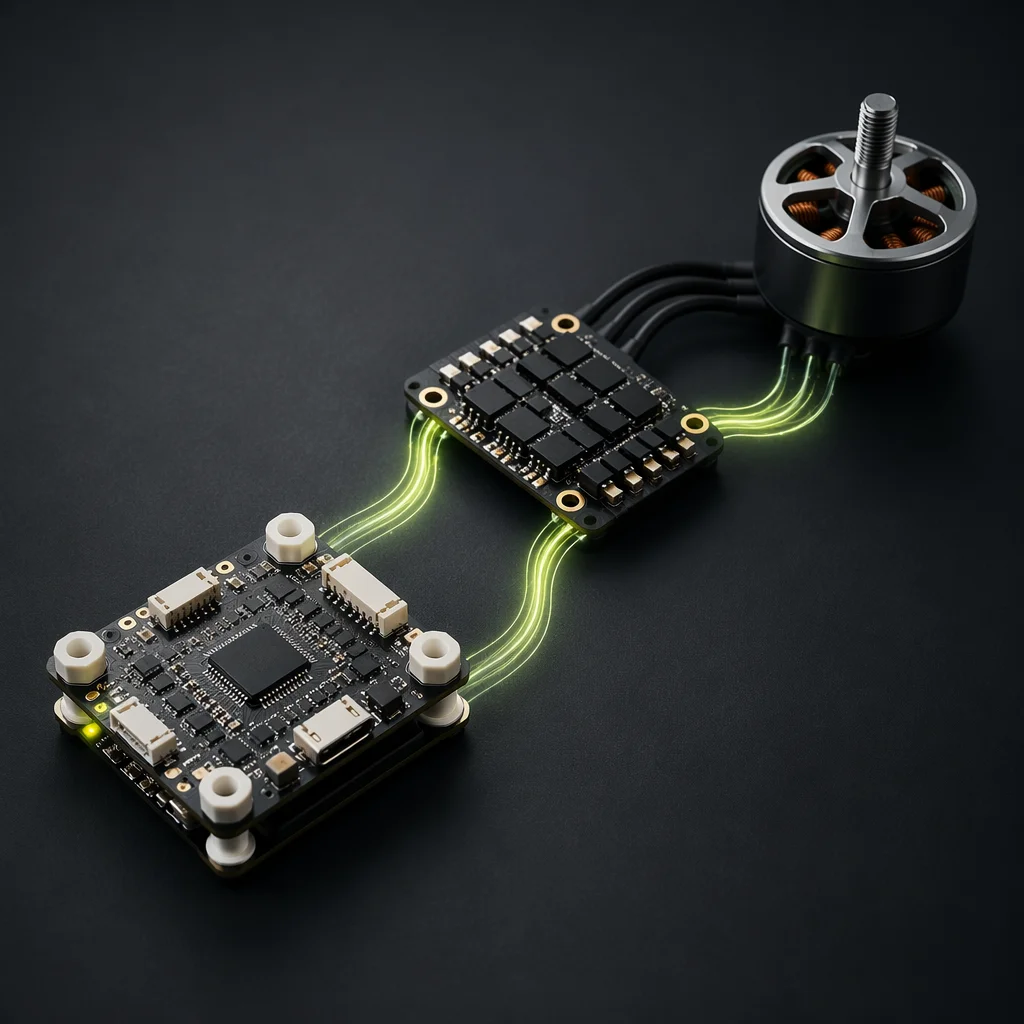
Flight Controller & ESC Matching
Terrain following and variable-mass control for agricultural multirotor platforms.
Airframe Materials Guide
Vinyl ester vs. epoxy matrix selection for chemical-resistant carbon fiber structures.